
How Much Does EMT School Cost in Texas?
A straight look at EMT tuition, the agency fees nobody warns you about, and how to compare Texas programs without overpaying.
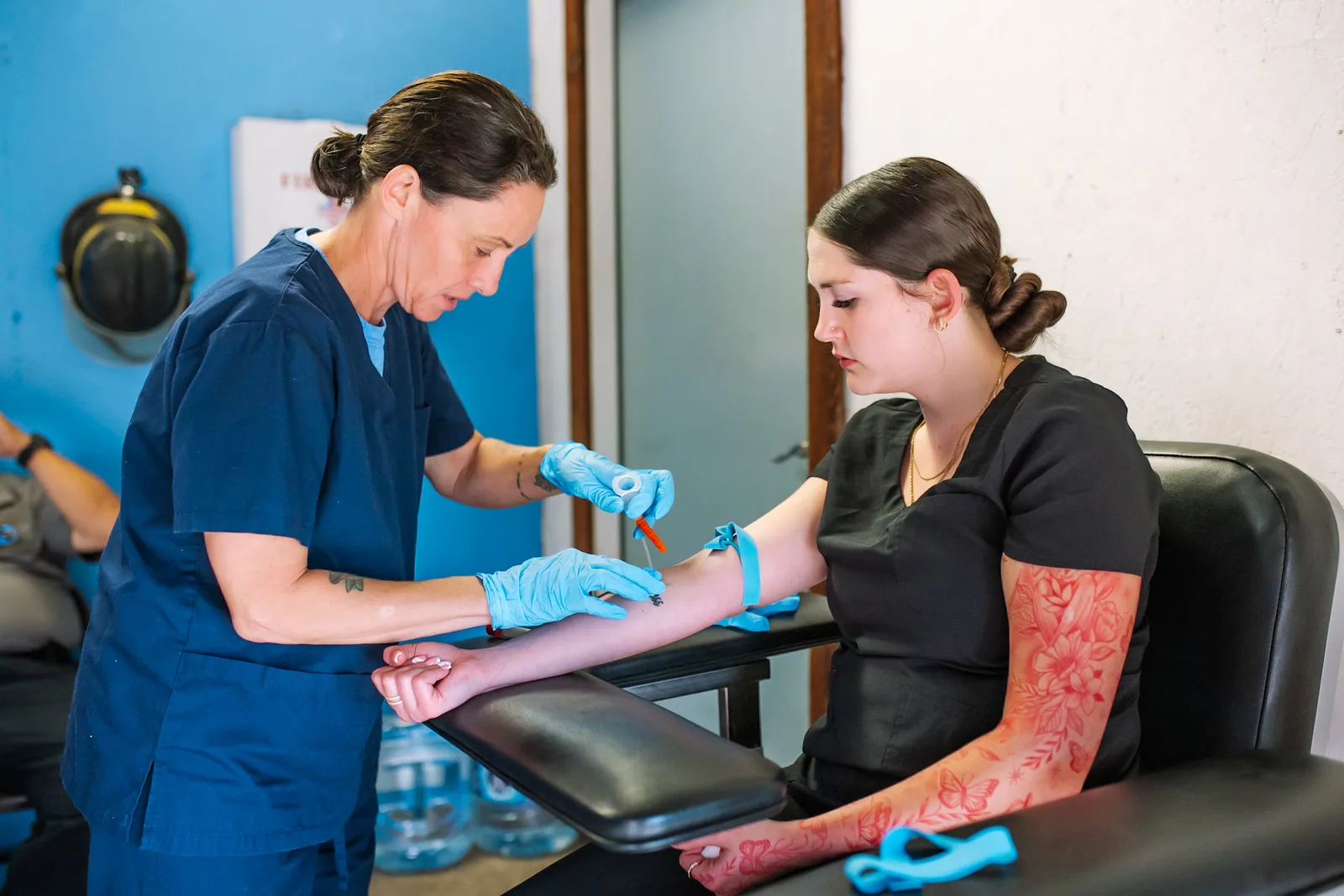
If you are thinking about becoming an EMT in Texas, the first question is almost always about money. It is a fair question, and the honest answer has two parts. There is what the school charges you for tuition, and there is the total cost of getting certified, which includes fees that do not go to the school at all. Plenty of programs quote you the first number and stay quiet about the second. This guide lays out both, so you can compare programs on real numbers instead of sticker prices.
For the full step-by-step path, see our guide on how to become an EMT in Texas. This post stays focused on the cost.
Tuition vs. total cost
Tuition is the money you pay the school to teach the course, run your skills labs, and get you ready for the exam. Total cost is tuition plus the outside fees you owe to the certifying agencies once you finish. Those are separate line items, and they are unavoidable no matter which school you attend.
At Texas Public Safety Training Academy, EMT program tuition is $1,750. TPSTA is a hybrid program, which means the classroom lecture work is online and the hands-on skills labs and clinical rotations happen in person. It is DSHS-approved and NREMT-aligned, built around roughly 140 didactic hours plus about 60 clinical hours, and most students finish in about two months. You can see the details on TPSTA's EMT program page.
What tuition includes, and the fees it does not
Your tuition covers instruction, labs, and clinical placement. It does not cover the two fees that go straight to the agencies that certify you:
- The NREMT exam fee, paid to the National Registry of Emergency Medical Technicians when you sit for the national certification exam.
- The DSHS certification application fee, paid to the Texas Department of State Health Services when you apply for your Texas EMT certification.
Both fees are set by NREMT and DSHS, not by any school, and both change from time to time. We are not going to quote you a dollar figure that could be wrong by the time you read this. Check the current NREMT and DSHS fee schedules directly for today's numbers, and budget for them on top of tuition. You may also have smaller out-of-pocket costs like a background check, immunization records, or a uniform shirt for clinicals, depending on the program.
The point is simple. When you compare schools, compare total cost, not just tuition. A cheap tuition number does not help you if the program cannot actually get you to the point of certification.
Why a cheap online-only "EMT cert" is a red flag
Search around and you will find offers for an "EMT certification" that is entirely online for a couple hundred dollars. Be careful. In Texas, EMT certification through DSHS and the NREMT requires supervised, in-person skills training and clinical hours. You cannot become a certified EMT by watching videos alone. There is no way around putting hands on equipment and on patients under supervision.
Those low-price online offers are usually one of three things: a refresher or continuing education course for people who are already certified, an EMR or first-aid course that is not the same credential, or something that simply will not qualify you to test with the NREMT. If a price looks too good to be true for a full EMT certification, it almost certainly is not the real thing. A legitimate program, hybrid or not, has to include in-person labs and clinicals.
Community college vs. nonprofit vs. private academy
Texas gives you three broad types of EMT programs, and each comes with tradeoffs.
Community colleges often run EMT courses in the neighborhood of around $1,000 for tuition, and in-district residents sometimes pay less. The catch is the schedule. College courses tend to run on a fixed semester calendar with set class times, which is hard if you work or live far from campus, and seats can fill up fast.
Private academies sit at the higher end. It is common to see private EMT programs priced well over $2,500, sometimes considerably more. You are often paying for a faster schedule or a particular brand, and the quality varies, so read the fine print on what is actually included.
Nonprofit training academies like TPSTA aim to land in the affordable middle while keeping the in-person training that certification requires. Our mission is to keep first-responder training affordable and accessible, especially for rural and volunteer members who need to stay certified and in their district. The hybrid format is part of that. You do the lecture work on your own time in the TPSTA Classroom and drive in for the hands-on parts, which cuts the time and travel cost of a traditional semester.
Financial aid and scholarships
Cost should not be the reason someone qualified walks away from this career. TPSTA is a 501(c)(3) nonprofit based in Bastrop, and part of that mission is helping people afford training. We offer scholarships and payment options, and the right thing to do is ask. Reach out and ask about scholarships and payment plans before you assume a program is out of reach. We would rather have that conversation than lose a good future EMT over a first number on a page.
The bottom line
For a realistic Texas budget, plan on EMT tuition somewhere in the four-figure range, plus the separate NREMT exam fee and DSHS application fee that every candidate pays regardless of school. At TPSTA, tuition is $1,750 for a DSHS-approved, NREMT-aligned hybrid program you can finish in about two months. Compare that against community college schedules and private academy pricing on total cost, not sticker price, and factor in whether the schedule actually fits your life.
FAQ
Does tuition cover the NREMT and state fees?
No. Tuition covers instruction, labs, and clinicals. The NREMT exam fee and the DSHS certification application fee are paid separately to those agencies and are subject to change.
Can I get certified fully online in Texas?
No. Texas EMT certification requires in-person skills labs and clinical hours. A fully online "EMT cert" will not qualify you to test with the NREMT.
Is TPSTA's program eligible for financial help?
TPSTA is a nonprofit and offers scholarships and payment options. Ask us about what is available before ruling out the program on cost.
How long does it take?
Most TPSTA students finish in about two months, built around roughly 140 didactic hours and 60 clinical hours.
Ready to get started? Look at the full details, schedule, and cost on TPSTA's EMT program page, or browse all programs to see everything we offer.