
How to Get a Texas Security License: Levels 2, 3 & 4 Explained
The full DPS licensing ladder, unarmed to armed to personal protection, plus what each level costs and how to move up.
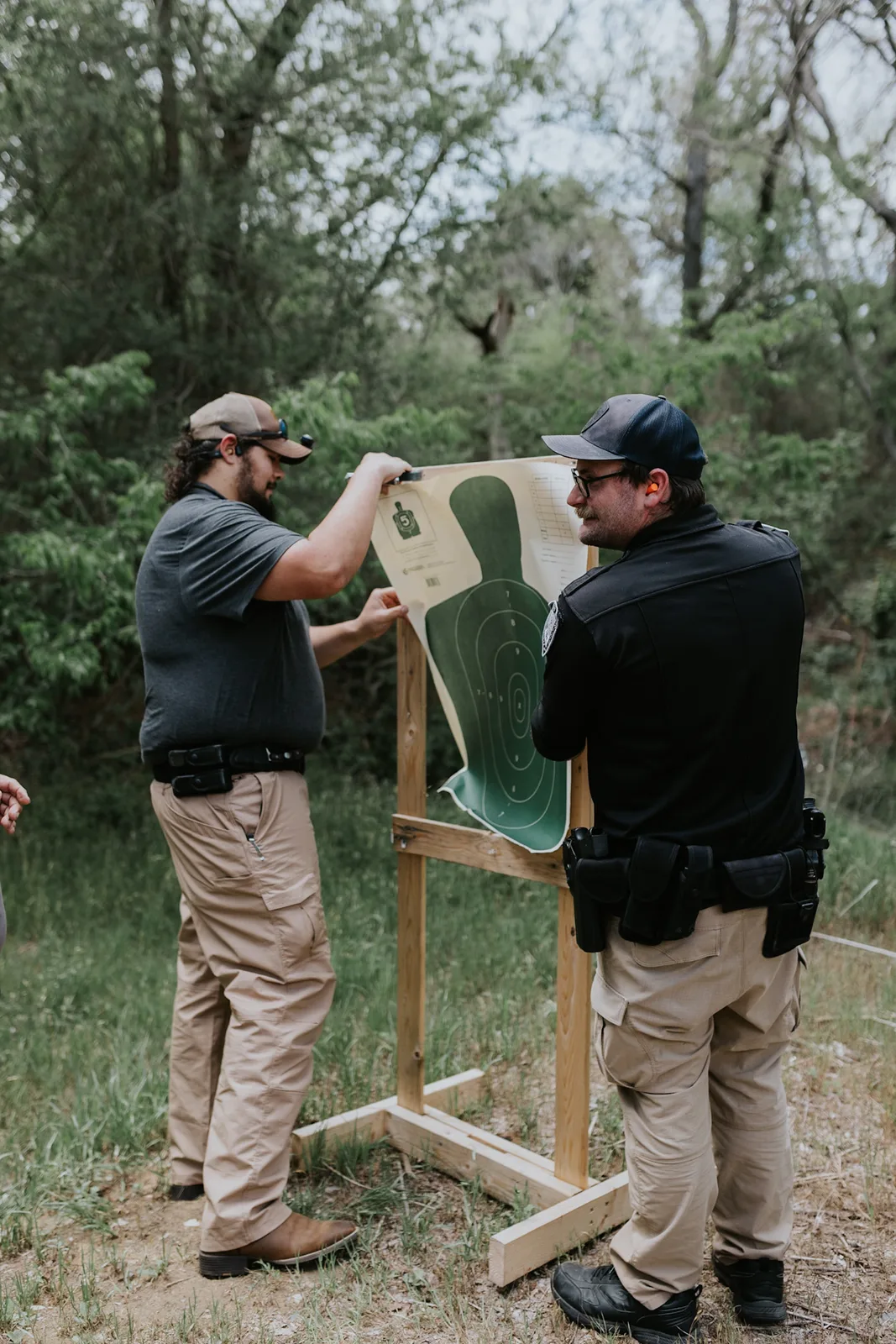
A Texas security license is the state credential that lets you legally work as a security officer, and it's issued by the Texas Department of Public Safety Private Security Bureau (DPS PSB). There isn't one single license, there's a ladder. You start at Level 2 (unarmed security officer), move up to Level 3 if you want to carry a firearm on duty, and top out at Level 4 if you want to do personal protection work (bodyguard). Each level has its own short training course, and each one builds on the one before it. Cost is low to start: at TPSTA the Level 2 course is just $50. Below, we'll walk the whole ladder step by step so you know exactly what to do.
What a Texas security license actually is
In Texas, private security is regulated by the DPS Private Security Bureau. If you want to work security for pay, you need to be trained and registered through them. People call it a lot of things, a "guard card," a "security license," a "commission." What matters is the level.
The training is the first half. After you finish an approved course, you apply to DPS for the license or registration that goes with it. DPS runs a background check and takes your fingerprints before anything gets issued. No training school, TPSTA included, hands you the state credential directly; we train you and give you the certificate, then DPS makes the license official.
Here's the ladder in one place:
- Level 2 — Non-Commissioned Security Officer (unarmed)
- Level 3 — Commissioned Security Officer (armed)
- Level 4 — Personal Protection Officer (PPO / bodyguard)
You go up in order. You can't skip to Level 3 without Level 2, and you can't do Level 4 without Level 3 first.
Level 2: your unarmed security license (start here)
Level 2 is the entry point for almost everyone. It's the Non-Commissioned Security Officer credential, which means unarmed. This is what you need to work as a standard security guard, front desk and lobby posts, retail and mall security, event staff, patrol, gate and access control, most standing guard jobs in the state.
The course is short. At TPSTA it runs 6 hours for $50. It covers the basics: your legal authority and limits, use of force, ethics and conduct, how to observe and report, and how to handle the common situations you'll actually run into on a post. When you finish, you apply to DPS and get registered as a non-commissioned officer.
If you're brand new to security, this is where you begin. Full stop. Start with Level 2 here.
Level 3: the armed (commissioned) security license
Level 3 is the one people mean when they say "armed security license." The official name is Commissioned Security Officer. A commission lets you carry a firearm while you're working a security post.
Because a gun is involved, the training is longer and it includes handgun and firearms proficiency on top of the classroom material. At TPSTA the Level 3 course is 35 hours for $350. You'll cover firearms safety, the laws around when you can and can't use force, and you have to demonstrate you can actually shoot to standard.
You must hold Level 2 before you can take Level 3. The commissioned course builds on the non-commissioned foundation, so the state requires the lower level first. Armed posts pay more, and a lot of officers move up to Level 3 once they've got some experience under their belt.
Ready to move up? See the Level 3 armed course. Not sure whether to go armed yet? We break the decision down in Level 2 vs Level 3 Security License in Texas.
Level 4: Personal Protection Officer (PPO / bodyguard)
Level 4 is the top of the ladder. It's the Personal Protection Officer (PPO) credential, the license you need to do close protection work, what most people call being a bodyguard. PPOs protect a specific person rather than a building or a property: executives, public figures, private clients.
At TPSTA the Level 4 course is $250. You must already hold Level 3 before you can take Level 4, since personal protection work is armed work and builds on the commissioned officer training. So the full path to becoming a PPO is Level 2, then Level 3, then Level 4.
If close protection is your goal, this is where you're headed. Explore the Level 4 PPO course.
The ladder, and why the order matters
This trips up a lot of people, so here it is plain:
- Level 2 stands on its own. Anyone can start here.
- Level 3 requires Level 2 first.
- Level 4 requires Level 3 first.
You climb one rung at a time. There's no way to jump straight to armed or straight to PPO. That's not a school rule, it's how DPS structures the credentials.
What each level costs
TPSTA is a 501(c)(3) nonprofit, so we keep tuition low on purpose, the goal is to get people trained and working, not to run up a bill. Here's the current pricing:
- Level 2 (unarmed): $50
- Level 3 (armed): $350
- Level 4 (PPO): $250
If you already know you want to go all the way, the smart move is our Level 2 + 3 + 4 bundle for $500. That's all three courses together and saves you money versus paying for each one on its own. See all security programs here.
Keep in mind DPS charges its own separate application and fingerprinting fees on top of tuition. Those go to the state, not the school, and they're part of getting the license issued.
How DPS licensing works, step by step
The process is the same at every level:
- Take the approved course for the level you want (Level 2 to start).
- Apply to DPS for the matching registration or commission.
- Get fingerprinted and pass the background check. DPS handles this part.
- Get registered and go to work.
Then, when you're ready to move up, you repeat the process for the next level. Train, apply, and DPS issues the credential.
Can you take the course online?
Yes, for the classroom portions. The lecture material for the security courses can be done online, which is the flexible part, you don't have to sit in a room for the whole thing. Level 3 is the exception on one point: the firearms proficiency piece has to be done in person on a range, because you actually have to demonstrate you can handle a handgun. There's no way around live-fire for an armed credential.
So Level 2 fits around a full-time job and can be knocked out fast. Level 3 mixes online classroom time with a hands-on range component.
Who each level is for
- New to security? Start at Level 2. It's cheap, fast, and opens the door to most guard jobs.
- Want higher pay and armed posts? Move up to Level 3 once you've got Level 2.
- Aiming for close protection / bodyguard work? Work up to Level 4 after Level 3.
Most people start at Level 2 and climb as their career grows. There's no rush, and there's no wrong place to start, as long as you start at the bottom.
Frequently asked questions
How much does a Texas security license cost?
It depends on the level. At TPSTA, Level 2 is $50, Level 3 is $350, and Level 4 is $250. You can get all three in a bundle for $500. DPS charges separate application and fingerprint fees on top of tuition.
What's the difference between Level 2, 3, and 4?
Level 2 is an unarmed security officer, Level 3 is an armed (commissioned) officer, and Level 4 is a Personal Protection Officer, essentially a bodyguard. Each level builds on the one before it.
Do I need Level 2 before Level 3?
Yes. You have to hold Level 2 before you can take Level 3, and you have to hold Level 3 before Level 4. You climb the ladder in order.
Is Level 3 the armed license?
Yes. Level 3 is the Commissioned Security Officer credential, and it lets you carry a firearm on duty. The course includes handgun proficiency training.
Can I take the course online?
The classroom portions can be done online. Level 3's firearms proficiency has to be completed in person on a range, since you have to demonstrate live-fire handling for an armed credential.
What is a Level 4 PPO?
A Level 4 Personal Protection Officer is licensed to do close protection, protecting a specific person rather than a property. It's the bodyguard credential, and it requires Level 3 first.
Ready to start? Start with Level 2
Getting your Texas security license is more approachable than most people think, and at $50, Level 2 is about as low-cost as career training gets. TPSTA is a nonprofit training academy in Bastrop, Central Texas, and we run all three levels plus the money-saving bundle.
Start with Level 2 (unarmed) — $50. When you're ready to go armed, step up to Level 3, and if close protection is the goal, finish with Level 4 PPO. Want the whole path at once? The Level 2 + 3 + 4 bundle is $500.
Not sure security is the right fit yet? Take a look at our overview of public safety careers in Texas to see how the different paths compare.