
How to Become a Firefighter in Texas: A Step-by-Step Guide
The real path to a Texas firefighting career: TCFP-approved academy, state exams, certification, and how to get hired.
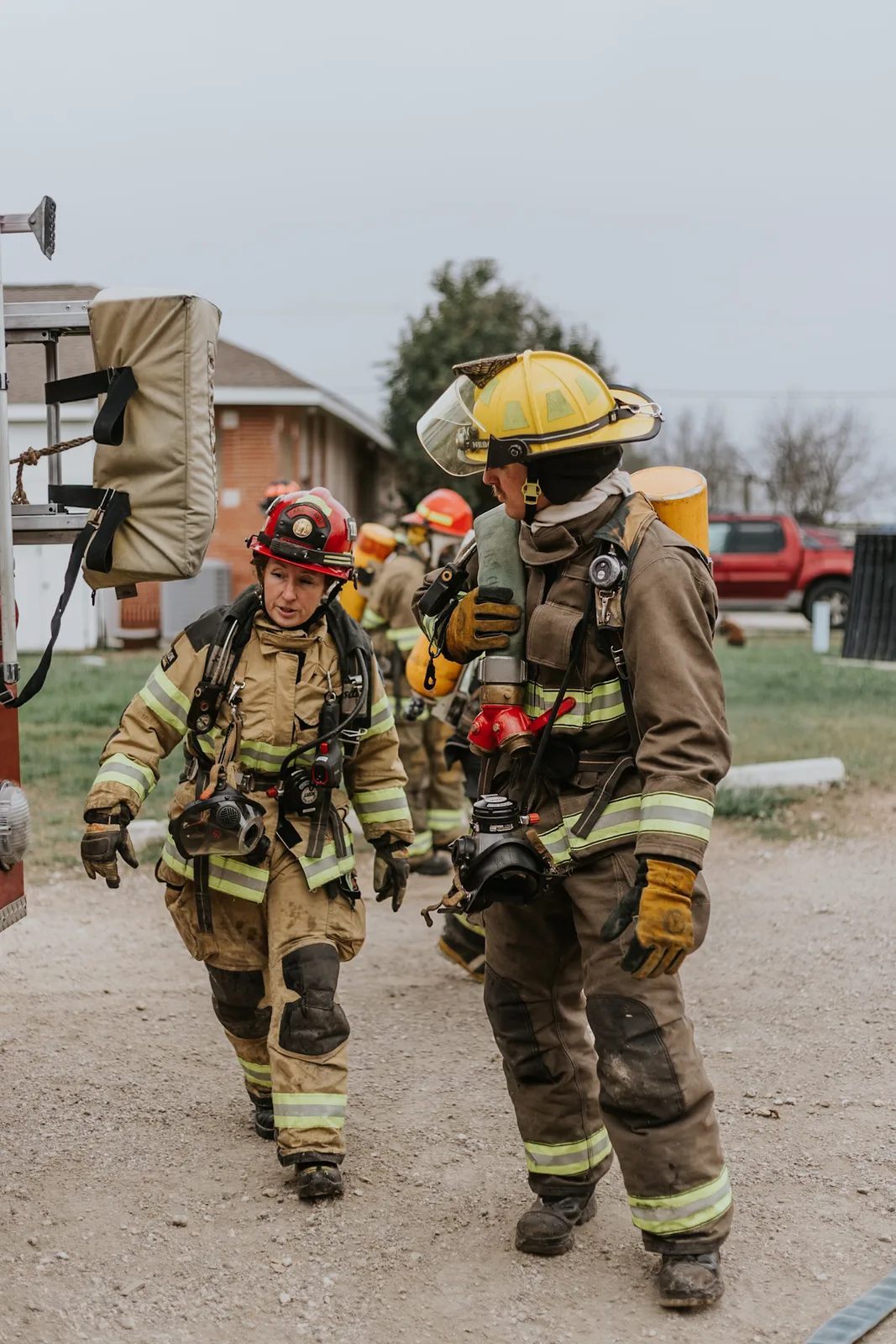
Here's the short version. To become a paid structural firefighter in Texas, you finish a TCFP-approved fire academy, pass the state written and skills exams, and earn your Basic Structural Fire Suppression certification from the Texas Commission on Fire Protection. Most people also get certified as an EMT, because departments want both. A full-time academy runs a few months. Cost varies a lot by school. At TPSTA our Structural Firefighter Academy is $3,000, TCFP-aligned, with live-fire training and IFSAC/Pro-Board seals. That's the whole path. Now let's walk through it so you know exactly what to expect.
What a firefighter actually does
Fighting fire is part of it. The bigger part is everything else: medical calls, car wrecks, hazmat, water rescues, alarm checks, public education, and a lot of training. Most calls a modern fire department runs are medical, not fire. That's why the job is really two jobs stacked together, fire and EMS, and why so many recruits show up already thinking about both certifications.
It's physical, it's shift work, and it's a team sport. If you can handle stress, stay calm, and pull your weight, the rest can be taught. Nobody walks in knowing how to throw a ladder or read smoke. Those are trained skills, and a good academy builds them into you rep by rep until they hold up on a bad day.
The step-by-step path
Becoming a Texas firefighter follows a clear order. Skip a step and you'll stall out, so here's the sequence.
- Meet the basic requirements. Be at least 18, have a high school diploma or GED, and be physically capable of the work.
- Complete a TCFP-approved fire academy. This is the Basic Structural Fire Suppression program, built around NFPA 1001 Firefighter I and II. You'll cover fire behavior, hose and ladder work, search and rescue, ventilation, forcible entry, and live-fire evolutions.
- Pass the state exams. After the academy you sit for the TCFP written test and a hands-on skills test. Pass both and you're eligible for certification.
- Earn your TCFP certification. This is the credential that lets you work as a structural firefighter in Texas. Many academies, ours included, also deliver IFSAC and Pro-Board seals so your certification travels outside Texas.
- Get hired. Departments run their own civil service tests, physical ability tests (often the CPAT), interviews, and background checks. Your certifications get you in the door; the hiring process decides the rest.
Most recruits also knock out EMT certification somewhere in here, either before, during, or right after the fire academy. More on why below.
Requirements and prerequisites
To start a Texas fire academy you generally need to:
- Be 18 or older
- Hold a high school diploma or GED
- Be physically capable of the training and the job
- Pass a background check (departments look hard at criminal history)
You don't need a college degree to become a firefighter in Texas. You need the certification and the ability to do the work. A clean record, a valid driver's license, and decent physical conditioning go a long way toward getting hired once you're certified.
One thing worth doing early: get in shape before the academy starts, not during it. The training is demanding by design, and recruits who show up already able to carry weight, climb stairs in gear, and keep moving have a much easier first few weeks. You don't have to be an athlete. You do have to be ready to work.
How long it takes
A full-time structural fire academy typically runs a few months of intensive, in-person training. Add EMT certification and you're looking at more time, though many people stack the two back to back. From the day you start to the day you're certified and applying to departments, plan on several months to roughly a year depending on your schedule and whether you're training full time.
If you're working a job while you train, that timeline stretches. That's normal, and it's one reason we built our schedule to be more flexible than a rigid college semester.
What it costs
Fire academy costs in Texas vary widely. Community college programs can run several thousand dollars once you add fees, gear, and testing. Some programs cost far more.
TPSTA's Structural Firefighter Academy is $3,000. That covers TCFP-aligned instruction, hands-on live-fire training, and preparation for the state exams, with IFSAC/Pro-Board seals on your certification. We're a 501(c)(3) nonprofit, so the price reflects the real cost of training you well, not a margin. Budget separately for the state exam fees and any personal gear a program doesn't include, and ask any school you're considering to spell those out up front.
What TCFP is (and why it matters)
TCFP stands for the Texas Commission on Fire Protection. It's the state agency that regulates structural firefighting in Texas. TCFP sets the training standards, approves academies, administers the certification exams, and issues the certifications departments require.
Here's why that word "approved" matters: if your academy isn't TCFP-approved, your training won't lead to a valid Texas structural firefighter certification. Always confirm a program is TCFP-approved before you enroll. We break this down further in TCFP certification explained.
Why fire + EMS dual certification matters
Most Texas fire departments want firefighters who are also certified in EMS, usually at the EMT level, and some at paramedic. Since the majority of calls are medical, a firefighter who can also run an ambulance call is far more valuable and far more hireable.
Being dual-certified in fire and EMS is one of the strongest things you can do for your odds of getting hired. If you're serious about a career, plan on both. You can explore the EMS side under all TPSTA programs.
Volunteer vs career entry
There are two common ways in.
- Career (paid): You certify, then compete for a full-time position with a municipal or county department. Better pay and benefits, more competition, and departments expect certifications up front.
- Volunteer: Many Texas communities are protected by volunteer departments. Volunteering is a real way to get experience, training, and a foot in the door, and some volunteers move into paid roles later.
Neither is wrong. If a paid career is the goal, get TCFP-certified and add EMS. If you want to serve your community while you figure it out, volunteering is a solid start.
Structural vs wildland
Most people who say "firefighter" mean structural firefighting, buildings, houses, vehicles, and the TCFP path this guide covers.
Wildland firefighting is a different track: grass, brush, and forest fires, with its own training and certifications. Texas has plenty of wildland work, and the two careers can overlap. If that's your interest, look at our wildland firefighter pathway.
FAQ
How long is fire academy in Texas?
A full-time structural fire academy usually runs a few months of intensive in-person training. Part-time or working around a job takes longer.
How much does it cost?
It varies by school. TPSTA's Structural Firefighter Academy is $3,000. Some community college and private programs cost more once fees and gear are added.
What is TCFP certification?
It's the credential from the Texas Commission on Fire Protection that lets you work as a structural firefighter in Texas. You earn it by completing a TCFP-approved academy and passing the state exams.
Do I need to be an EMT too?
Not to certify as a firefighter, but most Texas departments strongly prefer or require it. Dual fire + EMS certification makes you much more hireable.
Is there an age or education requirement?
Yes. You must be at least 18 and hold a high school diploma or GED to start a Texas fire academy.
Can I train while working?
Yes, though it stretches your timeline. TPSTA built a more flexible schedule than a rigid college semester to make training around a job realistic.
Ready to start?
The path is clear: certify through a TCFP-approved academy, add EMS, and get hired. If you're in Bastrop, Central Texas, or anywhere you can get to us, we'll train you right and we'll keep it affordable.
See TPSTA's Fire Academy and the next start date.
Want the bigger picture first? Read our overview of public safety careers in Texas, or browse all TPSTA programs.